zaterdag 27 juni 2015

Closing the loop – EU stakeholdermeeting Circular Economy


On the 25th of June, many representatives of interested parties from industry, policy, science and ngos joined at the Commission’s Charlemagne Building in Brussels to tell the European Commission what the new policy package on Circular Economy should contain.
Last year, as one of the last acts of Commissioner Potoćnik, a policy package on Circular Economy, consisting of a set of communications accompanied by proposals for new legislation, was already presented. This was withdrawn by the new Juncker Commission.
That was probably a mistake, because vice president Timmermans soon turned out to be a convert to the great potential of Circular Economy. At the stakeholder meeting on 25 June, he gave the introductory speech. He now sees that this is the only way forward. Important statement: business has a longer-term view than politicians.

An official from Bienkowska’s Cabinet (Industry) put forward that the European industry should become cleaner and smarter, providing customized products and services, and making efficient use of resources. This is different language from that heard from the previous Commissioner. Apparently the whole Commission feels that the emerging Circular Economy can sustain or even strengthen Europe’s competitiveness and create jobs. This is not just a feeling, there are also figures:


During the crisis period, eco-industries have continued to grow and provide employment.                                                                                                                                                                                                                                                                                                                     Especially Now that China starts embracing the circular economy, the fear is mounting that the EU will be overtaken. Timmermans pointed out that a country like China, where an economic transition can be imposed from above, has a much easier task than a pluralist democratic society like the EU.

Ellen MacArthur presented the new report of her Foundation. Research that has been done by McKinsey shows that developments towards a circular economy to business already underway:


 Source: McKinsey


That indeed is consistent with what Timmermans said about policy lagging behind. That is why this day was so important. What steps should be taken through EU policy and regulations to boost the circular economy? What should be in the policy package?
In the parallel sessions that followed, speakers from business, consumer and civil society organizations, national policy, and science put forward very diverse suggestions. What emerged was that there are many different pictures of Circular Economy, and that it is a very broad field to address through policy. Accordingly, it will be difficult for the European Commission to consolidate what was put forward into a robust and ambitious policy package.

The policy that should pave the road for the Circular Economy turns out to be covering a much broader area than the previous Commission had in mind last year (or was allowed leeway). Increasing the proportion of recycling in Europe (to 30%), through incineration and landfill bans on recyclable waste, is expected to be an important element of the new package. But also and especially outside the waste, and even the environment domain, there are regulations that stand in the way of the transition to a circular economy and shall have to be adapted, in order to stimulate innovation and market development.
 
Everyone seems to agree that product policy should be back on the agenda (it more or less disappeared after 2002), for example by expanding the rules for ecodesign of consumer products to include material use and address reparability, recyclability, etc.  Another issue that was frequently mentioned was the extension of the guarantee period. And setting quality standards for secondary (recycled) materials can promote recycling and increase consumer trust.

There is no one-size-fits-all solution to product policy. In the automotive industry, a lot of progress in ensuring the product’s longevity has already been made: secondary materials are used, there is a whole system of quality-assured replacement parts, and a car keeps its value for a long time. In other areas this is very different. And there is still the aspect of energy efficiency. Is it more or less sustainable to keep cars or appliances such as refrigerators in use for longer periods of time? Don’t we achieve more resource efficiency by exchanging them every few years for the latest models, which are much more energy-efficient? This can be calculated through life-cycle analysis, but it should be done product-by-product (group).

The role of consumers had a separate session, where also concepts like 'nudge' were raised. The big question is always where the power lies: with the big brands and their sophisticated marketing strategies, or the purchasing consumers who want to be well-informed on the environmental performance of a product, but can no longer see the wood (environmental sustainability) for the trees (labels). The current Directive on Unfair Commercial Practice that aims to address green claims doesn’t function well, because it only enters into action in the case of complaints. Some ideas for a different approach were put forward, making substantiation of green claims a requirement.

The focus was also on the importance of value-chain agreements and self-regulation by the industry. The Dutch Green Deal approach was promoted. Many speakers pointed out that if governments, and big companies as well, take on circular procurement, the demand for circular products and services will be increased tremendously, and innovation will be strongly stimulated. The European Commission can also do much to promote targeted research and innovation (that is already happening through the research framework program Horizon 2020).

The 'how' of it all remained somewhat in the dark. That is the great challenge of the circular economy. Product policy and eco-design are now the most concrete, but will take years of work. in the Netherlands, value chain cooperation, research and innovation, and room for experiment are now the main routes to Circular economy. The European Commission is interested in this. However, to create more volume and to accelerate the transition, more will be required. Can an indicator and a mandatory target for material efficiency steer the economy into the desired direction or not? The parties seem to be diametrically opposed. The Netherlands and other Member States are against it, the European Environment Agency (main supplier to the Commission of facts and figures on the environment) is in favour.

And the big elephant in the room was agriculture. Dame MacArthur showed what a circular scenario for the three main themes - mobility, food, and the built environment - would mean:


Source: McKinsey

But hardly anything was said about achieving those closed cycles in food and agriculture, and previous attempts to address food production in resources policy stranded. That is not due to the agricultural lobby (COPA COGECA), who at this stakeholder meeting were perhaps the only ones raising the issue of the biological side of Circular Economy: natural capital. However, the Agricultural Commission DG was not there. Will there again be a veto on this sensitive topic?

woensdag 27 augustus 2014

CIRCULAR DESIGN IN THE PLASTICS VALUE CHAIN


Recently, I undertook a small, qualitative survey of the role of designers in the plastics value chain in the Netherlands, and the potential for circular design. The background for this survey was the Plastics Value Chain Agreement.

Plastics Value Chain Agreement
This agreement was concluded in November 2013 between 55 parties from business, government, research, and environmental organisations, and is aimed at creating a sustainable market for the entire production and consumption chain from raw materials to plastic products, the use of these products by companies and consumers, as well as the reuse of materials and products once they have been disposed of. This plastic cycle is being formed as far as possible by sustainability in the production processes, by product engineering and design focusing on widespread reuse and by collecting and sorting plastic waste streams in an environmentally friendly way, and by physically or chemically turning them into new raw materials and products of the highest possible quality, thereby preventing ‘leaks’ from the cycles’ system as far as possible.

For the survey, I undertook a round of interviews with about 25 people in the sectors of (industrial) design, research and higher education, manufacturing, and recycling.
I found that plastics production is a complex and diversified value chain. There are many kinds of polymers, products, markets, and all have their own characteristics. The role of the designer in the plastics value chain is not an easy one to grasp.


When we talk about circular design, what do we mean?
There are different perspectives, with some people focusing on design for recycling or even design for longevity, and others looking at possibilities to design for products made from recycled material. Circular design is being used to encompass all these perspectives. It takes a life-cycle perspective at products and tries to go for the best option from an environmental point of view.
An important feature of circular design is the emphasis on the need for new business models. Not only the product is being redesigned, but the chains of supply and the ways by which customer needs are satisfied as well. When you supply a function, or accompany a product with a service (say, maintenance), the relationship between supplier and customer changes. So a designer has to look not only at the product, but also at the wider context, including the product’s functions and the needs it fulfils.

Circular design has to get rid of the image that it is about ‘doing creative things with waste’. Instead, it should focus on a transition in the way we do business and create added value.
Conny Bakker, TU Delft

The designers I spoke to are well-educated and well-informed about sustainability. They know about recycled materials and life-cycle analyses, and they are willing to try and convince producers, marketers and consumers of the possibilities of sustainable design. They have also discovered the importance of different ways of organizing the product development process. Maybe they are not representative for the profession as a whole. But they are an inspiring group of frontrunners who might be able to make change happen. 

These designers mentioned several stumbling blocks for circular design that they encountered. When it came to the use of recycled materials, the limited availability of sufficiently large supplies of recycled material of a consistent quality was an important bottleneck. Furthermore, designers and manufacturers mentioned the (negative) image and perceived aesthetics of recycled materials, and the lack of knowledge, especially with producers, of the possibilities of recycled materials. Other obstructions to the functioning of a circular economy in the plastics chain that were mentioned are the lack of transparency on the quality of recycled materials on the market; and legislation. 

What can be done?  
An essential step would be to increase technical knowledge of materials and their applications through research and development. For innovations to be brought to the market, public and private partners need to look at the options for sharing risks, sharing knowledge and open innovation.

Technical universities and universities for applied science are doing research and developing courses on sustainable design and on recycling. It remains necessary, however, to mainstream recycling knowledge and sustainability knowledge into curricula of design engineering. Also, more attention can be paid to updating professionals’ skills and knowledge, e.g. of 3D-printing.

It isn’t enough to increase knowledge about circular design. There is also the position of the designer in the value chain to consider. Designers are not always in a position of sufficient power to implement change. They can mediate between producer and material supplier, but if they do not have enough bargaining power, they won’t be able to acquire materials of sufficient quality. And to be able to persuade producers to try more innovative and sustainable options requires not only knowledge of recycled materials, but also experience, a relationship of trust, and the willingness to explore consumer markets. Some are already showing the way, and there are fine examples of sustainable design on the market, for instance the Ahrend 360 chair, Interface carpet tiles or the Philips Eco-Senseo.

So, a first step on the way to increase the market for sustainably designed products is to show what is already possible. What we need to do is showcase examples of well-designed (consumer) products of recycled material, of design for recycling, of product-service-systems and new business models, to a wide audience. A next step could be to come up with easy-to-follow guidelines for designing with recycled materials. And last but not least, a dialogue between actors in the value chain should take off aimed at concrete cooperation and actions.

Much has been said about legislation, especially European legislation standing in the way of the circular economy. Present European legislation, by strictly regulating the management of hazardous waste and dangerous substances, is felt to create obstacles to the use of recycled plastics, and the circular economy in general. Maybe it is time to amend some of the legislation, without losing sight of the protection of health and environmental safety.

The coming months will see a fresh round of discussions on the circular economy in Brussels, after new policy outlines were published last week. Designers, too, might want to seize the opportunity to make themselves heard.
In the Netherlands, the Plastics Value Chain Agreement is set to move into concrete action and explore new ways of collaboration. If you want to get involved, look at the (Dutch) website: http://www.kunststofkringloop.nl

Ilia Neudecker  
Senior adviser, Foxgloves consultancy – towards a sustainable Europe 
+31 (0)71 301 8922 / +31 (0)6 5147 2718 (mobile) / ilia3@kpnmail.nl / www.foxgloves.eu

donderdag 19 juni 2014

Circular Economy - it should be about more than just waste!

Green Week in Brussels, though taking place in a conference centre tucked away between textile sweatshops in a multicultural neighbourhood off  Bruxelles-Midi, nevertheless managed to whip up lively discussions with an audience from all over Europe and even the US. Though the theme was 'the circular economy', most sessions addressed waste and recycling.

So, what is the circular economy? Is it just about waste? If we take the  model promoted by the Ellen MacArthur Foundation (http://www.ellenmacarthurfoundation.org/circular-economy/circular-economy/interactive-system-diagram), circular economy is about more than reuse and recycling. Jocelyn Bleriot of the EMF presented the familiar pictures with the technical cycle on one side and the biological cycle on the other. He proceeded to show several examples of  'closing the loop', all of which came from the technical cycle. I asked him a question about the biological cycle, mentioning that this is a different cycle from the technical. In the biological cycle it is far more challenging to ‘close the loop’.  Essentially, it is not about waste minimisation (though this is one of the issues), but about pressures from land-use and from biodiversity. Bleriot agreed, and told us that EMF has started with the low-hanging fruit. They are, however, well aware of the ecosystem service approach. EMF will move to the biological cycle later.

In another session, Bleriot showed some examples from the biological cycle, with biogas installations turning biowaste to useful purpose, and options for closing the loops of nutrient cycles of N, P and K in dairy farming. An interesting link between both cycles has already been made by the Fraunhofer Institute, which calculated that up to 80 percent of CO₂ emissions from German industry could be captured and reused by rooftop greenhouses that profitably produce crops.

However, none of these solutions address the negative effects of land use, with the associated biodiversity loss, and the services performed by ecosystems such as forests and oceans. These issues have been noted by Commissioner Potočnik in his Roadmap Resource Efficiency. Addressing these issues with policy measures is more difficult. Much is expected from the sustainable food communication, which will be part of the Circular economy package expected 'before the summer break' (probably 1st of July).


As announced by Commission officials earlier, this is not only meant to address the reduction of food waste, (which by itself is important enough), but also the environmental impact of food consumption. But will they dare to speak the M-word? The consumption of animal proteins, especially from meat, destroys the world's ecosystems and contributes to loss of habitats and species, as is now well-known.

A first step for the Commission could be to procure more sustainable catering service next time.  Vegetarians like me had a hard time finding something edible at lunchtime, and I ended up dumping the chicken. How sustainable is that? 

maandag 10 maart 2014

Circular economy - did it start with the Vikings?


dirhams and reliquaries
One would hardly look at the Vikings as an example of a sustainable culture - the common view of Vikings is that of pillagers and destroyers, not the kind of considerate and responsible lifestyle generally associated with sustainability.
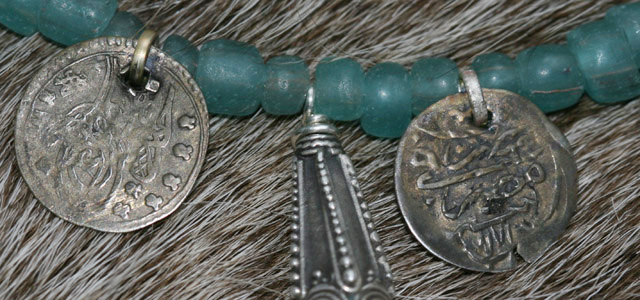
However, some early examples of the circular economy were already well-established practices with the longboat-sailing and axe-wielding wild men best-known for the sack of Lindisfarne. The exhibition 'Vikings - life and legend' that opened this week at the British Museum showcases Arabian dirhams remanufactured into jewellery  a reliquary stolen from a monastery reused by a Viking lady who inscribed her name in runes in the bottom, and worn bracelets chopped up and recycled as bullion.
Yes, I trained as an historian before becoming an environmental professional. So it's fun to be able to join the perspective of the former with the latter. 
 

So much for the past - back to our times

Together with approximately 11,000 other visitors, I spent a couple of days in London at Resource http://www.resource-event.com/, which claims to be the first event on the circular economy ever organised in the UK. It brought together an inspiring mix of people from all around the Circular Network: manufacture, retail, recycling business, social enterprises, charities and network organisations, consultancies, universities and regional governments. 
 

looking after it for the next generation

 The organisers had brought on some thought-provoking speakers. I listened to Sir Ian Cheshire, from the DIY retail company Kingfisher, who expressed a strong belief that anybody's business can be reinvented to fit into the circular economy; James Woudhuysen, who claimed that there was no resource shortage. He failed to persuade us that the circular economy was humbug, as he chose to ignore UN, OECD, WRI data all pointing in another direction; and Walter Stahel, who used his 30-year-old Toyota as an example of how the circular economy could work. 

Contrary to what I thought, a refurbishment of an old car will lead to a reduction of GHG emissions, as well as a reduction in waste. Another example he used was that of the Patek Philippe watchmakers, who claim: 'You never actually own a Patek Philippe. You merely look after it for the next generation'. Such a watch, by the way, will cost you at least half a year's salary. Stahel also mentioned the Pont de Millau, which had been procured in 2001 with a 78-year contract that included design, financing, building and operation of the bridge. The bridge is practically maintenance-free. The crucial part of the development of the circular economy to Stahel was its emphasis on performance.

remanufacturing

Remanufacturing turns out to be something that is already happening on a substantial scale in the business-to-business part of the value chain, and in very specialist niches of public procurement. For instance, at the expensive end of the automotive industry (Rolls Royce), and with the military. High-end investments in equipment keep their value, so replacing components, engines or spare parts easily makes sense. At the same time, the suppliers are specialised so there is little competition, and finally, there are trustworthy quality standards in place.
This serves to point out under what conditions the broadening of remanufacturing to less specialised markets could take place: ensuring quality and reliability is key.

vibrant new aesthetics

'Vibrant new aesthetics are coming into existence - sustainable design is colourful and witty', said Clare Brass, tutor of innovation design engineering at the Royal College of Art. The role of design was generally acknowledged as a very important one in the whole value cycle making up the circular economy. Redesigning products for recycling, remanufacturing and reuse, but also redesigning as part of a transition to business models centred around services rather than products. 
 

social enterprise

Notably, many of the people I spoke with saw the Netherlands as leading the way in achieving the circular economy. The UK is indeed late in taking up recycling, and the path it has chosen in collecting mixed packaging from households is open to criticism. However, on the upside, the UK is highly effective in promoting relatively new forms of business within the CE in the shape of networks and social enterprises. These are catching on at an incredible speed. Examples include the Restart project, a charity that helps you repair your ICT items, Rentez-vous, a fashion rental company, the Goldfinger Factory that turns your boring old stuff into gold, London Re-use, a network of outlets for repaired household items similar to the Dutch 'kringloopwinkels'.

enabling

In a workshop I attended, we discussed what was hampering the circular economy. Beside attitudes and assumptions about reuse, recycling and remanufacturing, several people in our group voiced the lack of flexibility in EU competition and procurement legislation, which was seen to stand in the way of working together in networks with other companies. As network organisation is really at the core of the circular economy, this needs to be brought to the attention of legislators. Maybe some room for experiment can be created at least.

This year's event acted as a launch pad; next year, the organisers promise something bigger. Dates already announced: 3-5 March 2015. 

Back to my website:  Foxgloves.eu